|
-
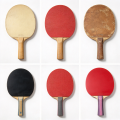
This article traces six stages of table tennis rubber development from 1880 to the present. Starting with plain wooden rackets and sponless pimpled rubber, it covers the sponge revolution, the birth of inverted rubber and diversified pimple rubbers, the era of organic speed glue, and the inorganic era since 2008. Driven by ITTF rule updates and ball material changes, rubbers have evolved into tacky, tensor, short-pimple, medium-pimple and long-pimple types. Equipment innovation keeps reshaping playing styles, and the double-inverted loop style dominates professional competitions nowadays.
-
ITTF Technical Specifications for Inverted Rubber, Pimpled Rubber and Anti‑Spin RubberThe International Table Tennis Federation (ITTF) sets strict physical parameter standards for racket covering materials to guarantee fairness in international table tennis competitions. Three main categories of rubber are defined: inverted rubber, pimpled rubber and anti‑spin rubber. All products must pass ITTF certification and appear on the authorised rubber list before being used in official ITTF
-
As an attacking-minded table tennis player, my game revolves around one core principle: take the initiative before my opponent does. Offensive play isn’t just about brute force—it’s a blend of explosive footwork, wrist-driven spin, tactical placement, and split-second decision-making. Below, I break down the essential techniques that define my style, followed by a practical guide to choosing the blade and rubber that amplify my strengths.1. Core Techniques for Offensive PlayA. The Forehand Lo
-
Applying new rubber to your blade is a ritual every serious player must master. A poor glue job creates dead spots, inconsistent bounce, and premature peeling. Here’s a no-nonsense guide to the essential tools and the techniques that separate a clean, tournament-legal bond from a messy disaster.---Tools You’ll NeedCategory Item Why it mattersAdhesive Water-based VOC-free glue (e.g., Butterfly Free Chack, DHS No. 15, Revolution 3) Legal, easy to apply, and creates a thin, even film. Avoid speed
-
As a high-level player wielding short pips (often referred to as Spectol or short pimple rubber), your greatest weapon is not raw power—it is disruption. You are a timing killer on the table.To play short pips at a professional level, you must abandon the traditional heavy topspin philosophy of inverted rubber and embrace a game of speed, trajectory manipulation, and spin reversal. Here is my comprehensive tactical and technical manual.1. Understanding the DNA of Short PipsBefore discussing str
-
Table Tennis Pimple Rubbers
-
performance characteristics, suitable playing styles, pros and cons, and a direct comparison table with carbon and arylate-carbon blades.
-
A Rubber Tester’s Guide to Blade Construction & Playing Styles
-
A detailed English article explaining how to distinguish Chinese, German, and Japanese table tennis rubbers, including their key characteristics, performance differences, and the unique advantages of Chinese rubbers.
-
English guide for beginners to choose their first table tennis blade, written to help them make a confident decision quickly.
-
How to Maintain and Care for Different Types of Table Tennis Rubbers
|
|